
Dry Eyes and LASIK: Why We Treat the Dryness First
Dry eye is the most common reason for LASIK hesitation, and the most fixable. How dryness affects candidacy, and why treating it first protects your result.

If your eyes are dry, the road to LASIK often starts with dry eye treatment.
“I’d love LASIK, but my eyes are too dry.”
Maybe you have kept eye drops in your bag for years.
Maybe wind, screens, winter air, or contact lenses have made your eyes feel too dry for LASIK to seem possible.
You may have been told you are not a candidate, or never brought it up because you assumed the answer would be no.
But dry eyes do not automatically close the door on LASIK.
For many patients, it simply means we slow down and treat the surface of your eyes first, so we have the clearest picture of what they need.
That is not a detour for its own sake. It protects your comfort, sharpens your measurements, and confirms LASIK is truly the right next step for you.
Why surgeons care so much about your tear film
Your tear film is the first lens light passes through, a liquid optical surface.
When it’s patchy, vision fluctuates and measurements wobble.
LASIK can temporarily affect the corneal nerves that help signal your eyes to make tears.
For most patients, that dryness settles back to baseline within three to six months.
The American Academy of Ophthalmology’s guide to LASIK is plain about the starting point: if you have dry eyes, they may be worse after LASIK.
The key is not asking your eyes to go through surgery while they are already struggling. If you have untreated dry eyes, we address it first.
That is not about delaying the LASIK you want. It is about a more comfortable recovery and protecting the outcome you trust us to deliver.
That is why a thoughtful LASIK consultation involves more than asking, “Do your eyes feel dry?”
We look closely at your tear film and eye surface, so we understand what is really going on and can help you move forward with confidence.
The good news: dry eye is treatable
Most dry eye traces to oil-gland dysfunction along the eyelids, not a lack of water.
The oily top layer runs thin, so tears evaporate too fast, which is why “just use drops” so often disappoints.
- Warm compresses and lid care, unglamorous, genuinely effective groundwork
- Quality artificial tears used on a schedule, not just in emergencies
- Prescription drops that calm the inflammation driving the cycle
- Omega-3 support and environmental tweaks where they make sense
- In-office treatments for stubborn gland dysfunction when the basics plateau
Most patients improve markedly within weeks of an actual plan, not a drawer of half-used drops.
Nebraska’s wind, winters, and screens all push the wrong way; treatment pushes back, and comfortable eyes change your day, surgery or not.
What can make eyes dry before LASIK
Before any treatment plan, it helps to know what is drying your eyes in the first place.
The National Eye Institute’s page on the causes of dry eye makes a useful checklist before a consultation.
It lists being 50 or older, and the hormone changes of pregnancy and menopause, among the things that make dry eye more likely.
It names some medicines for colds and allergies, depression, and high blood pressure, and conditions such as diabetes and thyroid problems.
Windy, smoky, or dry places are on the list, and so are long hours at a screen. An Omaha winter checks most of those boxes.
The same page notes that after some types of laser surgery, eyes may make fewer tears, and suggests asking your eye doctor how long that lasts.
For most of my patients, the answer is the one above: back to baseline within three to six months.
So bring your medication list to the consultation, including over-the-counter allergy pills, since some of them can dry the eyes.

What your LASIK consultation looks like
At Aviva, we build tear-film assessment into every surgical work-up. We do not just ask whether your eyes feel dry.
We evaluate and measure your tear film alongside your corneas, because both need to be healthy before we can make a clear recommendation.
If we find significant dryness, we treat it first and give the surface of your eyes time to stabilize.
Then we measure again and talk honestly about whether LASIK is the right next step for you.
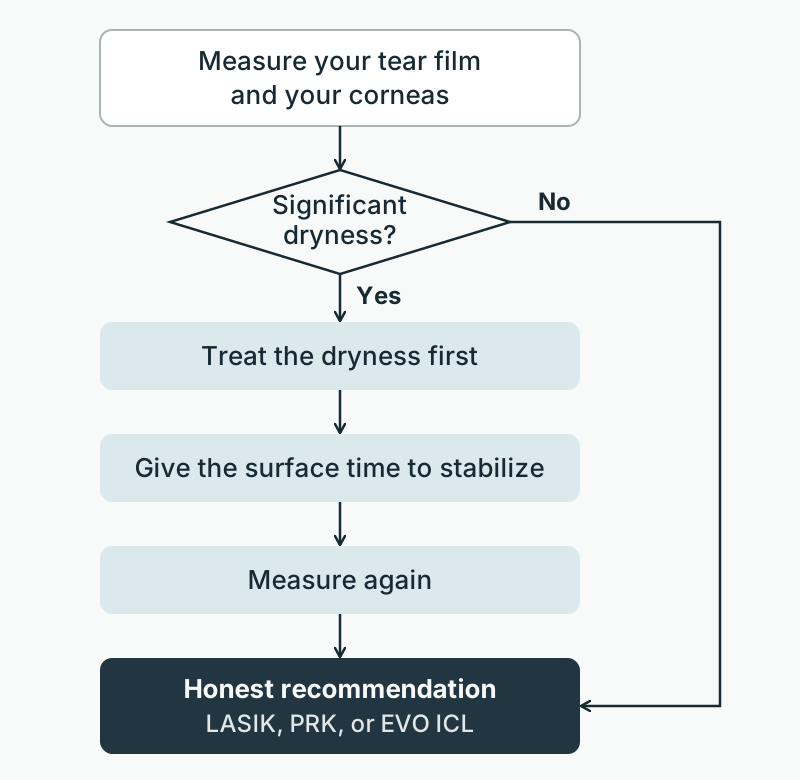
Sometimes that adds a few weeks to your timeline. We know that can feel frustrating when you are ready to move forward.
But those extra weeks are one of the most valuable safeguards in refractive surgery.
You might be surprised that we would rather delay a procedure than rush one. We are not.
Your result needs to hold up for decades. A few extra weeks is a small investment in getting it right.
What to bring to your consultation
A little preparation makes that first visit more useful.
- The drops you use now, prescription and over the counter, and how often you reach for them
- A rough idea of when your eyes feel worst: mornings, evenings, outdoors, or at a screen
- Your contact lens details, and how many hours a day you wear them
That pattern tells me a great deal before I measure anything.
Can you get LASIK if you have dry eyes?
For many people, yes. The answer turns on how your cornea measures once its surface is healthy.
Your tear film protects the surface of your eye, including the cornea that LASIK reshapes.
What I am waiting for is a stable surface, so that the second set of measurements is one we can trust.
If the surface settles, we can decide whether LASIK is still the right route. If it does not, other routes open up.
When dry eyes change the recommendation: PRK or EVO ICL
Sometimes, even after treating dry eye, your tear film tells us that LASIK is not the right tool for your eyes.
That is not the end of the conversation. It is the point where we look more closely at what will serve you best.
For some patients, PRK may be a better fit because it preserves more corneal nerves by avoiding a corneal flap.
I compare the two laser routes in PRK vs LASIK, including what the first week of PRK recovery asks of you.
For others, EVO ICL may fit better: it corrects vision without reshaping the cornea, making it less likely to worsen dry-eye symptoms.
Hearing, “Not LASIK, but here is what fits you better,” is not a consolation prize.
It is what honest measurements and recommendations are supposed to provide.
Our goal is not to guide you toward one procedure. It is your best possible vision, with your eyes kept healthy and comfortable.
The procedure is simply the route we take to get there.
Dry eye treatment before LASIK: what the weeks look like
Those weeks of treatment usually bring the first real relief, which is worth having whether or not surgery follows.
Improvement tends to build gradually, over several weeks, as inflammation settles and the oil glands begin to work better.
Some prescription drops sting briefly when you first start. I will tell you what to expect before you begin.
At home, a humidifier in the rooms where you spend the most time is an inexpensive, low-risk first step, especially in a Nebraska winter.
If contact lenses are part of the dryness, your eyes may feel more comfortable once you no longer need them every day.
Once the surface is stable, we measure again and plan on numbers we can trust.
Start with the dryness, whatever you decide
Treated eyes simply feel better, mornings, screens, and windy drives included, whether or not surgery ever interests you.
Book a consultation and we’ll assess both questions in one visit.
Omaha’s wind isn’t going anywhere. Your scratchy eyes can.
Treat the surface first, and every option downstream gets better, surgery included.
Questions, answered
Can I get LASIK if I have dry eyes?
Often yes, after the dryness is evaluated and treated.
Significant untreated dry eye is a reason to pause, almost never a permanent no.
Does LASIK cause dry eye?
Temporary dryness after LASIK is common and typically settles over weeks to months.
Starting from a healthy tear film is what keeps temporary from becoming persistent.
Which procedure is gentlest on dry-prone eyes?
It varies by eye, but PRK and the EVO ICL are often friendlier to fragile tear films.
Your measurements, not a rule of thumb, make that call.
How long does dry eye treatment take before surgery?
Commonly a few weeks to a couple of months, depending on severity and response.
We re-measure once the surface is stable, then plan surgery on trustworthy numbers.
More from Learn
 Eye Care & Conditions
Dry Eye in Nebraska: Winter Wind, Ragweed Season, and When IPL Helps
Nebraska is hard on a tear film: prairie wind, furnace-dry winters, and a long ragweed season. How I tell allergy from dryness, and what actually helps.
 Eye Care & Conditions
Cataracts or Glaucoma? Reading the Early Signs
Both are common after 60, both threaten vision, and they’re completely different problems. Here’s how the early signs differ, and why one is far sneakier than the other.
 Eye Care & Conditions
Glaucoma Treatment Today: Drops, SLT and MIGS, Explained
Glaucoma care has quietly modernized. Where daily drops fit, what SLT laser treatment changes, and how minimally invasive surgery (MIGS) earned its place.