
Dry Eye in Nebraska: Winter Wind, Ragweed Season, and When IPL Helps
Nebraska is hard on a tear film: prairie wind, furnace-dry winters, and a long ragweed season. How I tell allergy from dryness, and what actually helps.

Nebraska eyes work harder than most, and dry eyes are often how they let you know.
Think about what we ask of them: prairie wind with nothing to slow it down, and winters that keep the furnace running for months.
Add harvest dust in the fall, screens all year, and a long ragweed season in the Missouri River valley.
If your eyes burn, itch, or water their way through the year, you are not imagining the geography.
The good news is that these are different problems with different answers. The first job is working out which one you have.
Dry eye or allergies? Start with the itch
Allergy and dry eye get confused constantly, because both leave your eyes red and miserable.
They are treated differently, so it is worth telling them apart before you buy another bottle of drops.
- Allergy leads with itch, usually in both eyes, and it follows the pollen calendar
- Dry eye leads with burning and a scratchy, gritty feeling that builds through the day
- Dryness follows wind, screens, and furnace season more than pollen counts
- Watery eyes can mean dryness too: an unstable tear film triggers a flood of reflex tears
That last one surprises people. Overflow tearing is often a sign of dry eye, not proof that your eyes make enough healthy tears.
Many of my Omaha patients have both conditions at once, and each one needs its own plan.
Eye allergies: getting through ragweed season
From late summer until the first hard freeze, ragweed pollen is simply part of the air here.

The American Academy of Ophthalmology lists ragweed among the common triggers of eye allergies, and its advice is practical.
- Artificial tears help for a while by washing allergens out of the eye
- Antihistamine eye drops relieve the itching, redness, and tearing
- Keeping windows closed and running the air conditioning keeps pollen out of the house
- Sunglasses or glasses help keep pollen from reaching your eyes on windy days
The Academy is also firm about one habit: avoid rubbing your eyes. It only irritates them more and adds swelling.
I know how good rubbing feels for two seconds. A cool, clean washcloth over closed lids is the better trade.
Rinsing your lashes at the end of a high-pollen day helps too. It clears what the wind left behind.
Dry eyes in winter: getting through furnace season
Once the heat comes on, indoor humidity drops, and tears evaporate faster to match.
The National Eye Institute’s guide to dry eye names wind, smoke, and air conditioning among the things that make it worse.
Its list of things that help is refreshingly ordinary, and it is where I start with most patients.
- Run a humidifier in the rooms where you spend the most time
- Limit screen time, and take breaks when you cannot
- Wear wraparound sunglasses outdoors
- Drink plenty of water and get a full night of sleep

To that I add one from years of Nebraska driving: aim the car vents at your chest, not your face.
If you heat with a wood stove or love a fireplace, remember that smoke is on the same list as wind.
A humidifier will not treat every cause of dry eye, and the research on it is mixed. It is still an inexpensive, low-risk first step.
Each of these is small. Stacked together, they are often the difference between coping and comfortable.
Two everyday causes of dry eyes: screens and contact lenses
Two everyday habits deserve their own mention, because I see them behind so many winter complaints.
The first is screen time. We blink less when we concentrate on a screen, and every skipped blink leaves the tear film exposed longer.
The Academy lists long hours at a screen among the causes of dry eye for exactly that reason. Looking away on purpose helps.
The second is contact lenses. Both the Academy and the National Eye Institute note that wearing them makes dry eye more likely.
If your lenses feel fine in June and unbearable in January, the lenses did not change. The air did.
Shorter wearing days in winter help. So does asking whether contacts are still the right tool for your eyes at all.
If you have wondered about LASIK but assumed dry eye rules it out, read Dry Eyes and LASIK first.
Why the tear film has three layers
When home measures stop helping, the reason is usually in the structure of the tears themselves.
A healthy tear film has three layers, and the Academy’s overview of dry eye describes what each one does.
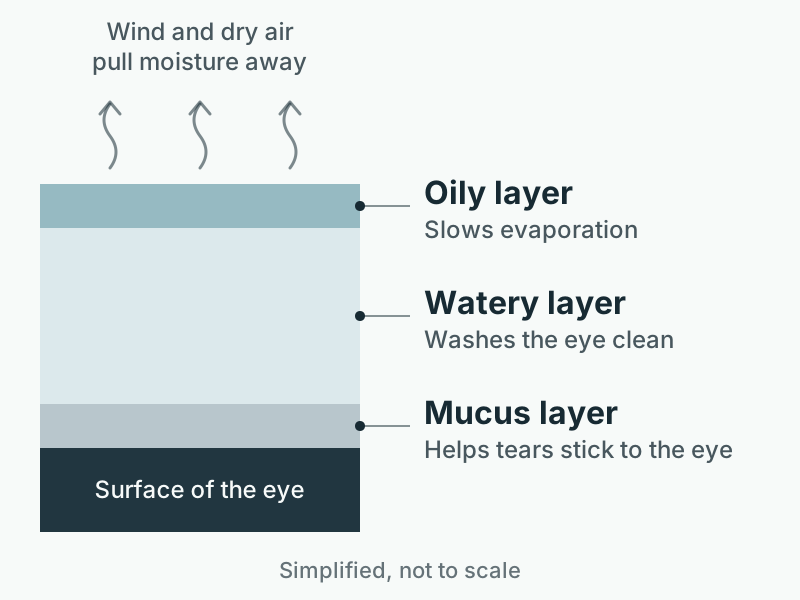
The oily outer layer comes from the meibomian glands in your eyelids. It keeps tears from drying up too quickly.
The watery middle layer is most of what we think of as tears. It washes away what does not belong.
The inner mucus layer helps the tears spread across the eye and stay there.
When the meibomian glands fall behind
Most of the stubborn dry eye I see traces to the oily layer. The glands stop delivering enough oil, and tears evaporate too fast.
That is why a drawer full of artificial tears so often disappoints. Water was never the missing piece.
If you are using drops many times a day and still uncomfortable, the glands are the first place I look.
IPL dry eye treatment: where it fits
Intense pulsed light, or IPL, treats the inflammation around the eyelids and supports the oil glands that protect your tears.
It uses the same light-based technology as cosmetic IPL, with a different goal. Calmer skin nearby is a possible bonus.
Most patients begin with a series of four treatments, spaced about two to four weeks apart, with maintenance as needed after that.
It is not for everyone. An exam of your glands and your skin type decides whether it suits you.
IPL is also one tool among several. Depending on the cause, I may calm inflammation with prescription drops or support tear production.
Expect improvement to build over several weeks as the inflammation settles. It is real progress, even though it is not overnight.
When dry eye symptoms need an eye doctor
The National Eye Institute’s threshold is simple: tell your doctor when dry eye gets in the way of everyday activities.
In practice, I would come in if any of these sound familiar.
- Artificial tears help for minutes, not hours
- Your eyes burn, water, or tire by the end of most days
- Your vision blurs until you blink a few times
- You have stopped wearing contacts because they hurt
- You are thinking about LASIK or cataract surgery, where a healthy tear film matters
And if an eye turns very red, painful, or sensitive to light, do not wait. Call an eye doctor that day.
Dry eye treatment in Omaha starts with an exam
At Aviva in Omaha, a dry eye visit starts with finding out why your tear film is failing.
I look at your glands, your tear film, and the surface of your eyes, and then we build a plan around the cause.
Once your eyes are comfortable, we set up a simple routine to protect that progress through the next season.
A little preparation makes the visit more useful. Bring three things with you.
- The drops you use now, prescription and over the counter
- A rough idea of when your eyes feel worst: mornings, evenings, outdoors, or at a screen
- Your contact lens details, if you wear them
That pattern tells me a great deal before I measure anything.
Book a consultation before the weather turns, and bring the drops you have been using.
You cannot move the wind. You can change how your eyes meet it.
Questions, answered
How do I know if it’s allergies or dry eye?
Itch points to allergy. Burning and grit point to dryness. Overlap is common.
An exam of your tear film separates them properly, and often finds both.
Is IPL for dry eye the same as cosmetic IPL?
It uses the same light-based technology, but the goal is different.
IPL for dry eye treats inflammation around the eyelids and supports the oil glands that protect your tears.
You may notice calmer skin near the treatment area. That is a possible added benefit, not the purpose.
How many IPL sessions does it take?
Most patients begin with a series of four treatments, spaced about two to four weeks apart.
After that, maintenance treatments may be recommended as needed to preserve your results.
Do humidifiers really help?
They can, especially in a Nebraska winter, when indoor heating makes dry air even drier.
Research on humidifiers and eye dryness is mixed, so treat one as a helpful part of a broader plan.
More from Learn
 Eye Care & Conditions
Cataracts or Glaucoma? Reading the Early Signs
Both are common after 60, both threaten vision, and they’re completely different problems. Here’s how the early signs differ, and why one is far sneakier than the other.
 Eye Care & Conditions
Glaucoma Treatment Today: Drops, SLT and MIGS, Explained
Glaucoma care has quietly modernized. Where daily drops fit, what SLT laser treatment changes, and how minimally invasive surgery (MIGS) earned its place.
 Eye Care & Conditions
Dry Eyes and LASIK: Why We Treat the Dryness First
Dry eye is the most common reason for LASIK hesitation, and the most fixable. How dryness affects candidacy, and why treating it first protects your result.