
Glaucoma Treatment Today: Drops, SLT and MIGS, Explained
Glaucoma care has quietly modernized. Where daily drops fit, what SLT laser treatment changes, and how minimally invasive surgery (MIGS) earned its place.

Most people I meet picture glaucoma treatment as a lifetime of eye drops.
Drops still matter, and for many people they are the right place to start. They are just no longer the only option on day one.
A laser treatment in the office can come first now, and the plan can change as your eyes do.
Here is how I walk patients through it, starting with what every one of these treatments protects.
What is glaucoma, and why does eye pressure matter?
Glaucoma is a group of eye diseases that damage the optic nerve, at the back of the eye.
That makes it a nerve problem. A cataract is a lens problem, and cataract surgery fixes it by replacing the lens.
The National Eye Institute’s guide to glaucoma notes that many people with it have high eye pressure.
Treatments that lower that pressure help slow the disease. That is the thread running through every option below.
Treatment can’t undo damage already done. What it can do is stop the damage from getting worse.
Where eye pressure comes from
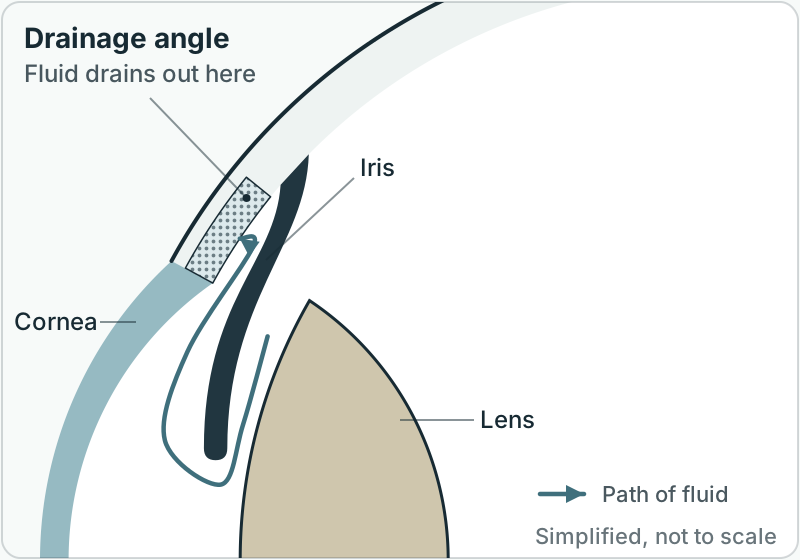
The pressure comes from fluid. It moves through the front of the eye and drains out where the iris and cornea meet.
That drain is a spongy tissue called the trabecular meshwork. In open-angle glaucoma, fluid passes through it too slowly.
The fluid backs up, and the pressure inside the eye rises with it.
What counts as normal eye pressure?
It varies. Normal eye pressure differs from person to person, and what is normal for one can be high for another.
For most people, a reading above 21 counts as higher than normal.
Some people with high pressure never develop glaucoma, and some develop it with pressure in the normal range.
That is why a single reading never settles it for me. I look at the pressure alongside the nerve itself and your side vision.
Glaucoma eye drops: the most common treatment
Prescription drops work by lowering the pressure in the eye.
They need to go in every day, on schedule, for as long as they are prescribed.
That sounds simple, and over years it can be hard. The trade-offs look like this:
- Remembering them every day, indefinitely, through travel and busy weeks
- Stinging or redness that makes skipping a dose tempting
- Refills and costs that keep coming
- No reward you can feel: drops protect the vision you have rather than sharpen it
Missed doses aren’t a character flaw. They are the known weak spot of any daily treatment.
Making daily drops easier
A few habits help more than willpower does.
- Tie the drop to something you already do daily, like brushing your teeth
- Keep the bottle where you will see it at that moment
- Ask for the refill a week before you run out
- Bring every bottle you use to your visits
If a drop stings or reddens your eyes, tell me rather than quietly skipping it. There are other ways to lower the pressure.
SLT laser treatment for glaucoma
Selective laser trabeculoplasty, or SLT, treats the eye’s drain directly, so fluid can leave more freely.
The American Academy of Ophthalmology’s guide to laser trabeculoplasty says it treats open-angle glaucoma by helping the drain work better.
The appeal is simple: once it is done, it does not depend on you remembering anything.
For some patients it is the first treatment, not the fallback. For others, it cuts down the bottles on the counter.
If nobody has offered you that choice, it is fair to ask about it.
What an SLT laser visit is like
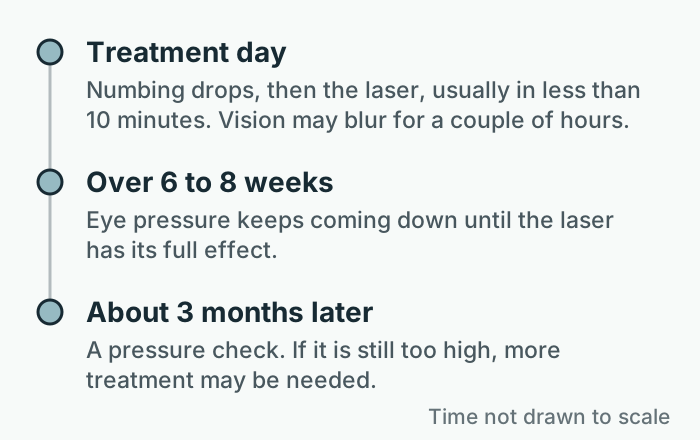
The Academy says it usually takes less than 10 minutes, in the office or an outpatient surgery center.
- Numbing drops go in first.
- A special contact lens rests on the eye to guide the laser.
- The laser treats the drain. You may feel a stinging sensation.
- Your vision may be blurry for a couple of hours, so plan on someone else driving you home.
You may also have medicine to use for a few days afterward.
How long SLT takes to work
SLT works gradually. It can take about six to eight weeks to fully lower your pressure.
At about three months, the pressure gets checked again. If it is still too high, more treatment may be needed.
That might mean another laser treatment, more drops, or surgery. Needing SLT again years later is normal, too.
MIGS: surgery, minimally
Minimally invasive glaucoma surgery covers a family of tiny stents and micro-procedures.
Each improves the eye’s drainage through openings measured in fractions of a millimeter.
The devices are small enough that you’ll never see or feel them, only the pressure numbers change.
MIGS shines brightest at cataract surgery time, the same visit can treat both conditions at once.
If you have glaucoma and a cataract is coming due, that pairing belongs in your planning conversation.
Traditional glaucoma surgery still exists for advanced disease; MIGS fills the long gap before it.
Recovery from MIGS is typically gentle, most patients notice the cataract improvement and little else.
How glaucoma is diagnosed: the eye exam
All of these treatments depend on finding glaucoma first, and that happens at an exam.
It is a comprehensive dilated eye exam, and none of it hurts.
A glaucoma check adds a few measurements to that exam:
- Eye pressure, taken with a gentle touch after numbing drops, with no puff of air
- Imaging of the optic nerve, which is just photography
- The thickness of your cornea
- A visual field test that maps your side vision
Of all of it, the field test asks the most patience.
The same visit looks at the lens too, where cataracts form. The difference between cataracts and glaucoma surprises a lot of people.
Told you are a glaucoma suspect?
Some people come to me as “glaucoma suspects,” after a routine exam flagged high pressure or an unusual-looking nerve.
Many turn out to need only careful watching. When that is the honest answer, it is the one I will give you.
Who should be checked, and how often
The National Eye Institute names three groups at higher risk:
- People over 60, especially Hispanic or Latino adults
- African Americans over 40
- Anyone with a family history of glaucoma
If you are in one of those groups, it recommends a comprehensive dilated eye exam every one to two years.
Glaucoma can run in families, so a diagnosis is a good reason to ask your siblings and grown children to get checked.
Glaucoma care over the long run
Glaucoma care is a relationship measured in decades, not a single decision.
Once treatment starts, pressure responds within weeks, and a follow-up confirms the plan is protecting the nerve.
After that, the rhythm depends on your risk. Stable eyes need periodic confirmation; changing eyes get attention sooner.
Most of those visits end with “no change,” which is exactly the result we are after.

Between visits, your part is to keep using your drops and keep your appointments.
Questions to bring to your appointment
Write these down before you come.
- What type of glaucoma do I have, and how far along is it?
- What pressure are we aiming for in my eyes?
- Would SLT make sense instead of my drops, or alongside them?
- How often should I come back, and what will we check each time?
Glaucoma treatment options in Omaha: where to start
If you are newly diagnosed in Omaha, or your last treatment conversation was years ago, it is worth a fresh look.
The best plan is the one that controls your pressure and that you can actually live with.
Book a consultation and bring your drops, any past pressure readings, and your questions.
Glaucoma rewards attention. The options today make attention much easier to give.
Questions, answered
Can glaucoma be cured?
No, but it can usually be controlled well enough to protect your vision for life.
The goal of every option, from drops to MIGS, is durable pressure control.
Is SLT painful or risky?
It’s an in-office laser treatment that most patients find quick and comfortable.
Like any procedure it has risks, reviewed honestly beforehand, they compare favorably with decades of drops.
Do I qualify for MIGS?
It depends on your glaucoma type, severity, and whether cataract surgery is on your horizon.
Imaging and an exam answer it quickly, the combination question is always worth asking.
I have no symptoms. Do I really need treatment?
Yes, symptomless is how glaucoma works, right up until vision is gone for good.
Consistent pressure control now is what keeps it symptomless forever.
More from Learn
 Eye Care & Conditions
Dry Eye in Nebraska: Winter Wind, Ragweed Season, and When IPL Helps
Nebraska is hard on a tear film: prairie wind, furnace-dry winters, and a long ragweed season. How I tell allergy from dryness, and what actually helps.
 Eye Care & Conditions
Cataracts or Glaucoma? Reading the Early Signs
Both are common after 60, both threaten vision, and they’re completely different problems. Here’s how the early signs differ, and why one is far sneakier than the other.
 Eye Care & Conditions
Dry Eyes and LASIK: Why We Treat the Dryness First
Dry eye is the most common reason for LASIK hesitation, and the most fixable. How dryness affects candidacy, and why treating it first protects your result.