Cataracts or Glaucoma? Reading the Early Signs
Both are common after 60, both threaten vision, and they’re completely different problems. Here’s how the early signs differ, and why one is far sneakier than the other.

In my practice, cataracts and glaucoma are two of the questions I hear most often from patients over 60.
They get mentioned together so often that people assume they must be related. They aren’t.
One clouds the window of the eye. The other quietly affects the cable that carries vision to the brain.
That difference matters more than most people realize, and it changes how I think about timing for each one.
Knowing which signs belong to which condition can help you understand how soon to come in.
Glaucoma vs Cataracts: Two Different Problems Entirely
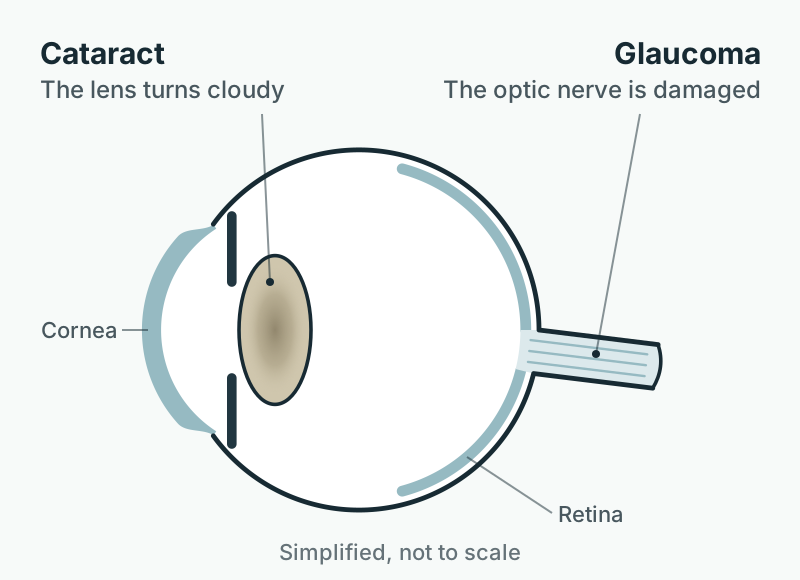
A cataract happens when the eye’s natural lens gradually turns cloudy with age.
I think of it as an optics problem: light scatters on its way in, and the world slowly loses its crispness.
If you live long enough, you will almost certainly develop one. It is simply part of aging.
Glaucoma is different. It involves damage to the optic nerve, so I think of it more as a wiring problem.
Cloudy optics can be replaced with a clear lens. A damaged nerve cable cannot be repaired.
With cataracts, time mostly costs you convenience. With glaucoma, time can cost you vision permanently.
Where Cataracts and Glaucoma Happen in the Eye
Picture the eye from the side. The lens sits near the front, just behind the pupil, and helps focus the light coming in.
The National Eye Institute explains how cataracts form: around age 40, proteins in the lens start to break down and clump together.
Those clumps make the cloudy area. Over time, it spreads across more of the lens.
The optic nerve leaves from the very back of the eye. It is the cable in my comparison, and glaucoma is what damages it.
In its guide to glaucoma, the American Academy of Ophthalmology says the optic nerve holds more than a million tiny fibers.
It compares them to an electric cable made up of many small wires. As those fibers die, blind spots form.
Early Signs of Cataracts: How They Announce Themselves
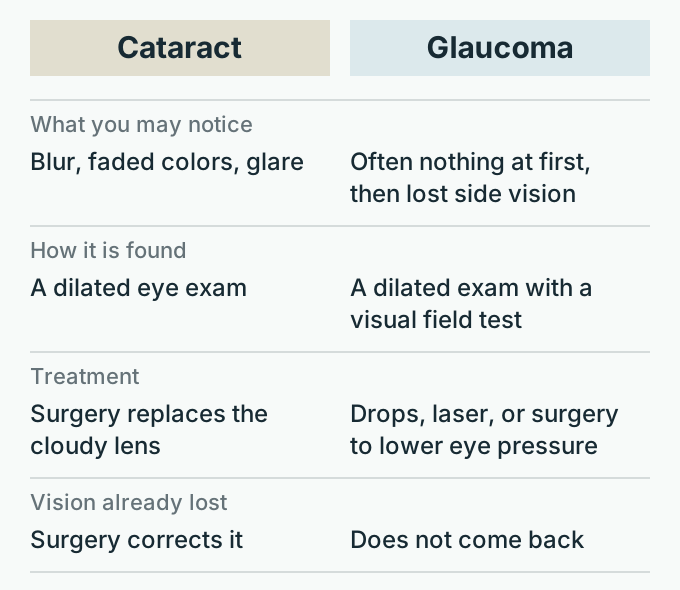
In my experience, cataracts tend to be considerate, as eye problems go. They announce themselves slowly, often through:
- Night driving becoming harder, with halos and starbursts around headlights
- Colors dulling toward yellow-brown, so gradually you forget what true white looked like
- Reading requiring more and more light, and twilight feeling darker than it used to
- Glasses prescriptions changing again and again without ever quite helping
Many patients describe it to me as looking through a windshield that never quite comes clean.
Two more signs to know: lamps or sunlight that seem too bright, and seeing double.
A cataract can form in one eye or both, but it cannot spread from one eye to the other.
The good news is that the fix is definitive. Modern cataract surgery replaces the cloudy lens, usually in under half an hour.
Waiting rarely puts your eye at risk. It simply postpones seeing clearly again.

What Causes Cataracts, and What Brings Them On Sooner
Age does most of the work. A few things make cataracts more likely, or bring them on earlier:
- Diabetes
- Smoking, or drinking too much alcohol
- A lot of time in the sun over the years
- Steroid medicines, such as those used for arthritis or allergies
- An eye injury, eye surgery, or radiation treatment on the upper body
- A family history of cataracts
Some of these you can do something about. On a bright Nebraska afternoon, that starts with sunglasses and a hat with a brim.
Living With an Early Cataract
Early on, small changes can make a cataract easier to live with.
- Brighter lights where you read and work
- Anti-glare sunglasses for bright days
- A magnifying lens for fine print
- An updated glasses prescription, while it still helps
Surgery earns its place once a cataract starts getting in the way of reading, driving, or watching TV.
When that time comes, the real decision is which lens replaces yours, and how well it fits the way you live.
Early Signs of Glaucoma: Why It Hides So Well
Glaucoma is the one I want patients to take most seriously, precisely because it is so quiet.
Its early symptom list is short. Usually, there isn’t one at all.
Pressure builds painlessly, the nerve erodes silently, and peripheral vision is often the first to go.
There’s no blur to report, no ache to complain about, nothing your instincts can catch on their own.
If glaucoma runs in your family, that history is often the loudest early warning you’ll get.
Your brain is remarkably good at filling in the missing edges, which can hide the loss from you for years.
By the time vision feels noticeably narrower, meaningful nerve damage has often already occurred.
That is how glaucoma earned the name “silent thief of sight.” About half of the people who have it don’t know it.
This is exactly why I recommend screening: to find it while there is still everything left to protect.
The rare acute form, with sudden pain, halos, and nausea, is the one true emergency worth same-day care.
Glaucoma Risk Factors Worth Knowing
Since glaucoma gives so little warning, risk factors have to do that job. The main ones:
- Being over 40
- Family members with glaucoma
- African, Hispanic, or Asian heritage
- High eye pressure, or corneas that are thin in the center
- Being nearsighted or farsighted
- A past eye injury, or long-term steroid use
- Diabetes, migraines, high blood pressure, or poor circulation
Having more than one raises the risk further. If two or three sound familiar, mention them when you book.
If an exam does find it, glaucoma treatment options usually start with prescription drops or an in-office laser treatment.
The Only Reliable Way to Tell the Difference
Because symptoms can overlap, some patients have both conditions at once.
That’s exactly why I rely on a thorough exam rather than symptoms alone.
During your exam, I look directly at the lens and the optic nerve, and measure your eye pressure.
I also use imaging to catch nerve damage years before you would ever feel it, and map your visual field when needed.
One unhurried visit with me can sort out a question that months of guessing on your own never could.
What a Dilated Eye Exam Checks
It starts with drops that widen your pupils. The exam itself is simple and painless.
A pressure check on its own is not enough to find glaucoma. The nerve and your side vision need a careful look too.
A full glaucoma exam, as the Academy describes it, also covers the drainage angle, where fluid leaves the eye, and the thickness of your cornea.
Before you come, jot down what you have noticed and when it started. Bring your glasses and a list of your medicines.
When to Come See Me
If night driving has become stressful, or reading now feels like it needs stadium lighting, I’d encourage you to come in.
Those are classic signs of cataracts, and we can start talking about timing right away.

If glaucoma runs in your family, I’d like to see you on a regular schedule, whether or not you have symptoms.
And past sixty, periodic dilated exams are simply good stewardship for your eyes, here in Omaha or anywhere else.
The National Eye Institute suggests a dilated exam every one to two years from age 60.
At Aviva, I offer both cataract surgery and glaucoma care under one roof, with consultations that take the time to listen.
Cataracts, you’ll likely see coming. Glaucoma, you often won’t, until later stages. Let’s let the exam do the seeing, together.
Book the exam. Leave knowing.
Questions, answered
Can you have cataracts and glaucoma at the same time?
Yes, commonly, they share risk factors like age but damage the eye differently.
Cataract surgery can even be paired with minimally invasive glaucoma treatment in one visit.
Does a cataract turn into glaucoma if untreated?
No, they’re unrelated mechanisms, and one doesn’t become the other.
A very advanced cataract can rarely raise eye pressure, one more reason not to wait indefinitely.
How often should I be checked?
Past sixty, or with a family history of glaucoma, regular dilated exams, your doctor will set the interval.
Glaucoma screening is the part you can’t self-assess, so the calendar matters.
Which one explains my night-driving halos?
Halos around headlights are classic cataract behavior, but they have other causes too.
An exam settles it quickly, and night-driving trouble is worth settling.
More from Learn
 Eye Care & Conditions
Dry Eye in Nebraska: Winter Wind, Ragweed Season, and When IPL Helps
Nebraska is hard on a tear film: prairie wind, furnace-dry winters, and a long ragweed season. How I tell allergy from dryness, and what actually helps.
 Eye Care & Conditions
Glaucoma Treatment Today: Drops, SLT and MIGS, Explained
Glaucoma care has quietly modernized. Where daily drops fit, what SLT laser treatment changes, and how minimally invasive surgery (MIGS) earned its place.
 Eye Care & Conditions
Dry Eyes and LASIK: Why We Treat the Dryness First
Dry eye is the most common reason for LASIK hesitation, and the most fixable. How dryness affects candidacy, and why treating it first protects your result.