
Does Insurance Cover LASIK, EVO ICL or Refractive Lens Exchange? FSA, HSA, and Financing
Most health insurance does not cover LASIK, EVO ICL, or refractive lens exchange. Here is what insurance actually covers, and how FSA, HSA, and financing close the gap.

I am often asked whether insurance covers LASIK. The short answer is that most health-insurance plans do not.
They generally consider LASIK, refractive lens exchange, and EVO ICL elective procedures.
That is because these procedures are chosen to reduce dependence on glasses or contacts, not to treat a medical emergency.
That is the disappointing part, and it is brief. The good news is longer.
Is LASIK Covered by Insurance? What Plans Usually Cover
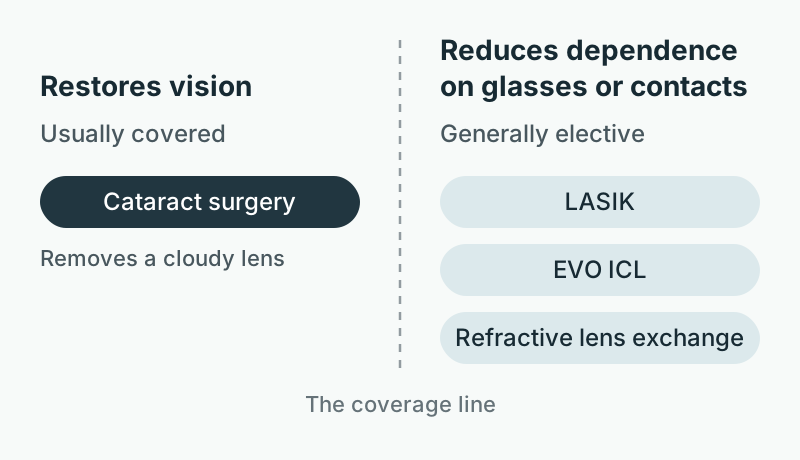
Health insurance typically draws a line between procedures that restore vision and procedures that reduce dependence on glasses or contacts.
Cataract surgery is usually covered because it removes a cloudy natural lens that is interfering with sight.
LASIK, refractive lens exchange, and EVO ICL are generally considered elective because they are chosen to improve vision, not to restore it.
The FDA says the same in its own list of reasons LASIK may not be for you: most medical insurance will not pay for refractive surgery.
The same page adds that although the cost has come down, it is still significant.
Does Vision Insurance Cover LASIK?
That said, it is still worth checking your specific plan. Some vision plans offer member discounts on certain vision-correction procedures.
A discount is not the same as coverage, but for my patients here in Omaha, it can meaningfully lower the out-of-pocket total.
If you carry a vision plan, ask what it actually commits to in writing before you count on it.
Vision plans and health plans are usually separate policies, with separate rules.
Two questions settle it quickly: is this a discount or actual coverage, and does it apply to the procedure your eyes need?
A discount may apply only at certain practices, so ask where it can be used.
Why Cataract Surgery Is Usually Covered
The American Academy of Ophthalmology notes that cataract surgery is generally covered by Medicare for people who are eligible.
Private insurance usually covers it as well.
Medicare covers the cost when your vision tests at a certain level of acuity, or clarity, and private plans may set similar requirements.
Even when the surgery is covered, some costs may remain. Special types of lens implants also cost more.
The Academy adds that choosing cataract surgery before your vision has deteriorated that far costs more.
Refractive lens exchange is the same operation, done by choice on a lens that has not clouded. That puts it on the elective side of the line.
Is EVO ICL or Refractive Lens Exchange Covered by Insurance?
The same line applies to both. Each is chosen to reduce your dependence on glasses or contacts, so most health plans treat it as elective.
EVO ICL
The EVO ICL is custom-made for each eye and placed in a surgical suite, which is why the cost of EVO ICL runs higher than LASIK.
It generally qualifies as a medical expense under FSA and HSA plans.
Refractive Lens Exchange
Because the procedure replaces your natural lens, the lens you choose is the biggest variable in refractive lens exchange cost.
FSA and HSA funds, often combined with financing, are how most of my patients approach it.
Using FSA and HSA Funds for LASIK
For many patients, FSA and HSA funds are one of the most helpful ways to make vision correction more affordable.
LASIK and other qualifying vision-correction procedures can often be paid for with pre-tax dollars.
- FSA: Funds are usually elected during open enrollment and may expire at year end, depending on your plan.
- HSA: Funds roll over year to year and remain yours until you are ready to use them.
- Both: Confirm your plan’s eligibility rules and keep your receipts.
If you are considering treatment next year, open enrollment is a good time to plan ahead.
If you have unused FSA funds this year, it may be worth scheduling a consultation before those funds expire.
December consultation calendars tend to fill with patients doing exactly this math, so it helps to plan ahead.

Does FSA Money Roll Over?
It depends on your plan. Some FSA plans allow a small carryover or a short grace period into the new year, and some allow neither.
A grace period gives you extra weeks into the new year to spend the old balance. A carryover moves a set amount forward instead.
Your benefits office can tell you which rules apply before you elect an amount.
An HSA is simpler. The balance carries forward, so you can build toward a procedure over more than one year.
Keep every receipt and statement. Your plan may ask to see them.
LASIK Financing and Payment Plans
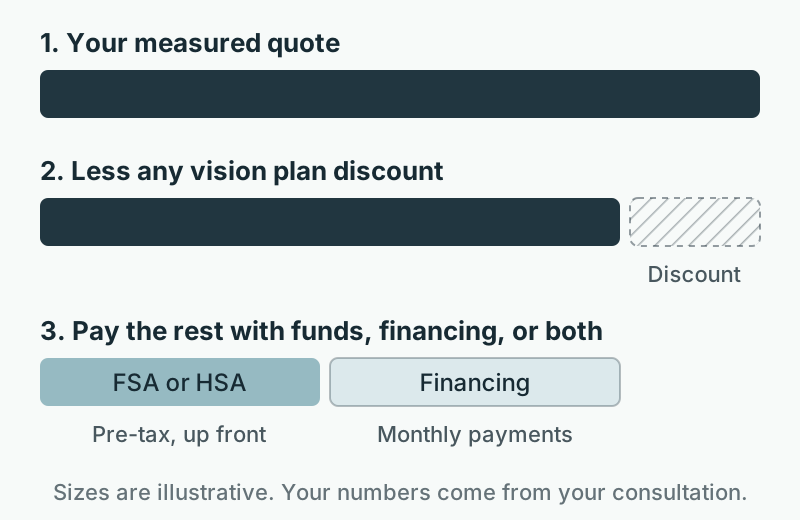
At Aviva, we offer medical-financing options that can spread the cost into monthly payments.
Many patients also combine financing with FSA or HSA funds to make the total more manageable.
The Academy gives similar advice for cataract surgery that insurance does not cover in full.
Its suggestions: ask the practice about payment plans, and see whether your employer offers a flexible spending account.
Before choosing a financing plan, ask about the interest rate, the payment term, and any promotional periods.
Also ask what happens after a promotional period ends, since rates can change once it does.
Some promotional plans defer interest rather than waive it. Ask whether interest is charged back if the balance is not paid off in time.
Ask to see the total you would repay next to the monthly figure. The gap, if there is one, is the price of spreading it out.
A payment you barely notice beats a lump sum you have to brace for, especially combined with FSA or HSA funds up front.
Payment should never determine whether a procedure is right for you. We start with your eye health, measurements, and vision goals.
Once we know which treatment is the best fit, we can talk through the numbers together.
What to Ask About Cost, Coverage, and Financing
Before moving forward, ask:
- Is my quote all-inclusive, including follow-up care and any applicable enhancements?
- Can I use FSA or HSA funds?
- Can I combine those funds with financing?
- Does my vision plan, employer, or professional organization offer a discount?
Clear, specific answers to all four are a good sign about the practice you are considering. Vague ones tell you something too.

What an All-Inclusive Quote Should Cover
- The full set of measurements that decides which procedure suits your eyes
- The procedure for each eye, and any lenses it needs
- Every scheduled follow-up visit
- A clear answer on what happens if your vision needs fine-tuning later
Ask whether the number covers one eye or both. Each eye is its own procedure, and a quote should say which.
If a quote cannot tell you where each of those sits, ask before you compare it with anyone else’s.
Talking Through the Numbers in Omaha
Paying for vision correction should not feel mysterious or overwhelming.
My goal is to help you understand the options clearly, so you can decide what feels right for your eyes, your goals, and your budget.
At Aviva in Omaha, the affordability conversation happens at your consultation, with your measured quote in hand.
You leave knowing your real numbers, not guesswork.
Bring your plan documents and your FSA or HSA balance if you know it. Both make that conversation quicker.
Book a complimentary consultation or learn more about LASIK at Aviva in Omaha.
Questions, answered
Is LASIK ever covered by health insurance?
Rarely, a handful of employers and unions negotiate benefits, and some plans discount rather than cover.
Ask your HR team or plan documents directly; it takes ten minutes and occasionally pays off.
Can I use both FSA and HSA money for the same surgery?
You generally can’t double-dip the same expense, and few people hold both accounts at once.
What you can do is combine account funds with financing for the remainder.
When should I fund my FSA if I want surgery next year?
During open enrollment, this fall. Estimate your quote at a consultation first, then elect that amount.
It’s the cleanest pre-tax path to vision correction there is.
Does RLE or the EVO ICL work the same way financially?
Broadly yes, elective vision procedures share the same FSA/HSA and financing logic.
The numbers differ; the strategy doesn’t.
More from Learn
 Practice & Patient Info
What to Expect at Your Vision Correction Consultation
The consultation is where your options get real. What we measure, what you’ll learn, and how to get the most out of an hour with your surgeon.
 Practice & Patient Info
Welcome to Aviva: A New Kind of Eye Care in Omaha
Aviva is open. Ivey Thornton M.D. on why Omaha didn’t need one more eye practice, it needed a different one.